Our Mission: Preserving Today to leave a better heritage for tomorrow
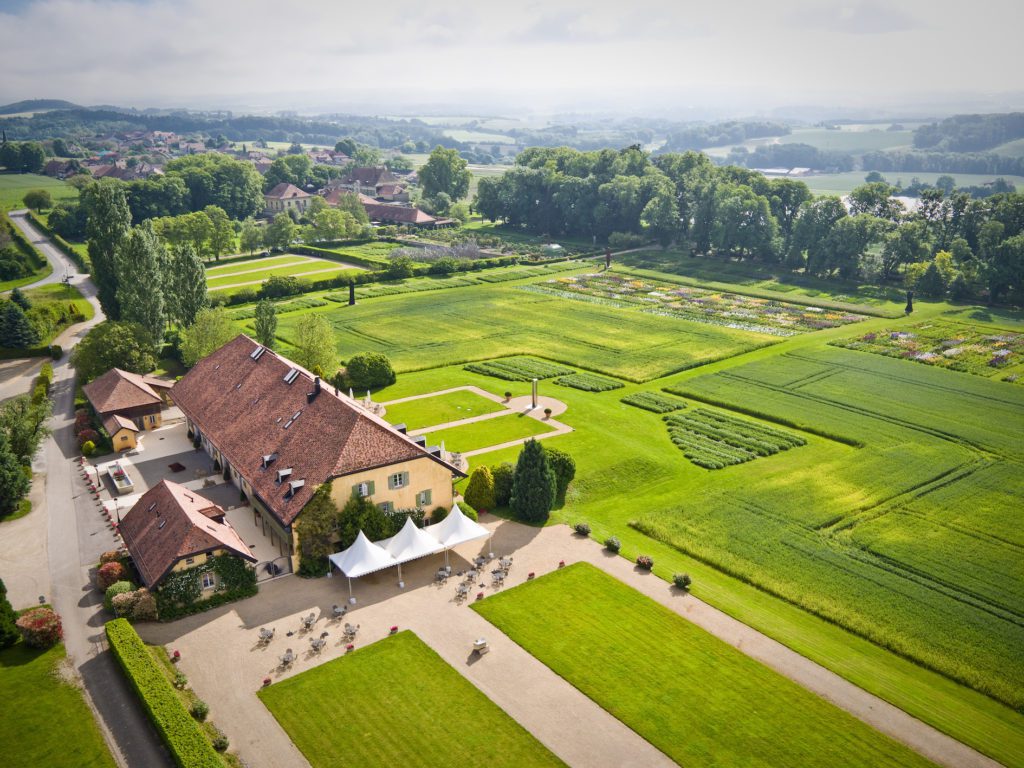
As the guardians of a unique heritage that has been passed down within the same family for over 700 years, we bear a great responsibility toward this exceptional estate, composed of nearly 90% farmland, vineyards, and gardens.
Opening the gardens to the public, selling our iris rhizomes and wines, and organizing events are initiatives we’ve developed over the past 70 years to ensure the heritage is preserved and passed on.
Today, this historic responsibility drives us to go even further: to reduce the environmental impact of our activities, use our resources wisely, and involve our employees, partners, and customers in this effort.
Every event can make a difference! Menu choices, the origin of ingredients, beverages, transportation, waste management, energy consumption…
Many decisions made during the planning of an event can help reduce its impact.
Our goal is to gradually guide our clients in making these choices, without compromising the quality of their experience.
Because a more responsible event must, above all, remain a successful, generous, and memorable event.
______________________________________________________________________________________________________________________________________
Concrete and measurable sustainability commitments
In 2025, Portes des Iris joined the Swiss Triple Impact (STI), launched by B Lab Switzerland, to structure its sustainability approach around specific and measurable goals. The STI directory is a registry of organizations that have completed the program and made concrete commitments to achieving the Sustainable Development Goals (SDGs) of the UN’s 2030 Agenda.

 Goal 1
By 2027, 10% of customers will choose alternatives that have an impact on the sustainability of their event, compared to 0% in 2024. * Using an event emissions calculator and our recommendations. The calculator will be finalized by the end of 2026.
 Goal 2
By 2030, we will reduce the Portes des Iris building’s fossil fuel consumption to zero compared to the 2025 baseline (no reduction) and generate more electricity to meet our own needs excluding events. * This will be achieved through an energy transition, including upgrading the heating system, installing solar panels, and renovating the buildings.
 Goal 3
By the end of 2026, we will reduce our non-recyclable waste by 30% compared to a scenario with no reduction in 2025 (food waste, metal, plastic) * as well as reduce our glass (water) and PET (water and other non-alcoholic beverages) waste sold to our customers by 30% compared to no reduction in 2024. * Through on-site recycling facilities.
 Goal 4
By the end of 2025, we will ensure that 100% of our employees are trained in sustainability best practices and will organize at least two training sessions. * Two half-day training sessions (Climate Mural, 2-Metric-Tons Workshop), each lasting 3 hours.
 Goal 5
By the end of 2026, we will raise awareness and train* 100% of our caterers on best practices in sustainability, and at least 50% of them will comply with our sustainability charter. *One training session offered per year. Goal achieved in June 2026.
Our 3 key principles
- Developping social connections
Placing people at the heart of our approach by promoting the well-being, skill development, and professional growth of our teams
- Preserving our resources
Sustainably reducing our energy consumption and waste production, while upgrading our infrastructure and practices
- Acting with our ecosysteme
Prioritizing local supply chains and encouraging more responsible practices among our suppliers, caterers, partners, and customers.
Our actions to date (September 2026)
Energetic Transition:
A research project is currently underway to identify solutions that will enable us to gradually reduce our fossil fuel consumption and improve the energy efficiency of our buildings.
Fewer single-use bottles:
Filtered water fountains have been installed for our events and visitors to reduce the use of glass and PET bottles.
Raising Awarness to create action:
Our teams participated in a Climate Fresk the first step in an awareness and training program on sustainability issues.
More efficient sorting to reduce waste:
A new waste sorting and collection system has been implemented to better separate the different waste streams, measure volumes, and identify opportunities for improvement.
Our commitments to our customers
As a team, we’ve put into words the values that are important to us. Our discussion focused not only on each of our individual areas of expertise but also on why we do what we do. As a result, we’ve identified actions that we’ve committed to prioritizing in our day-to-day work.
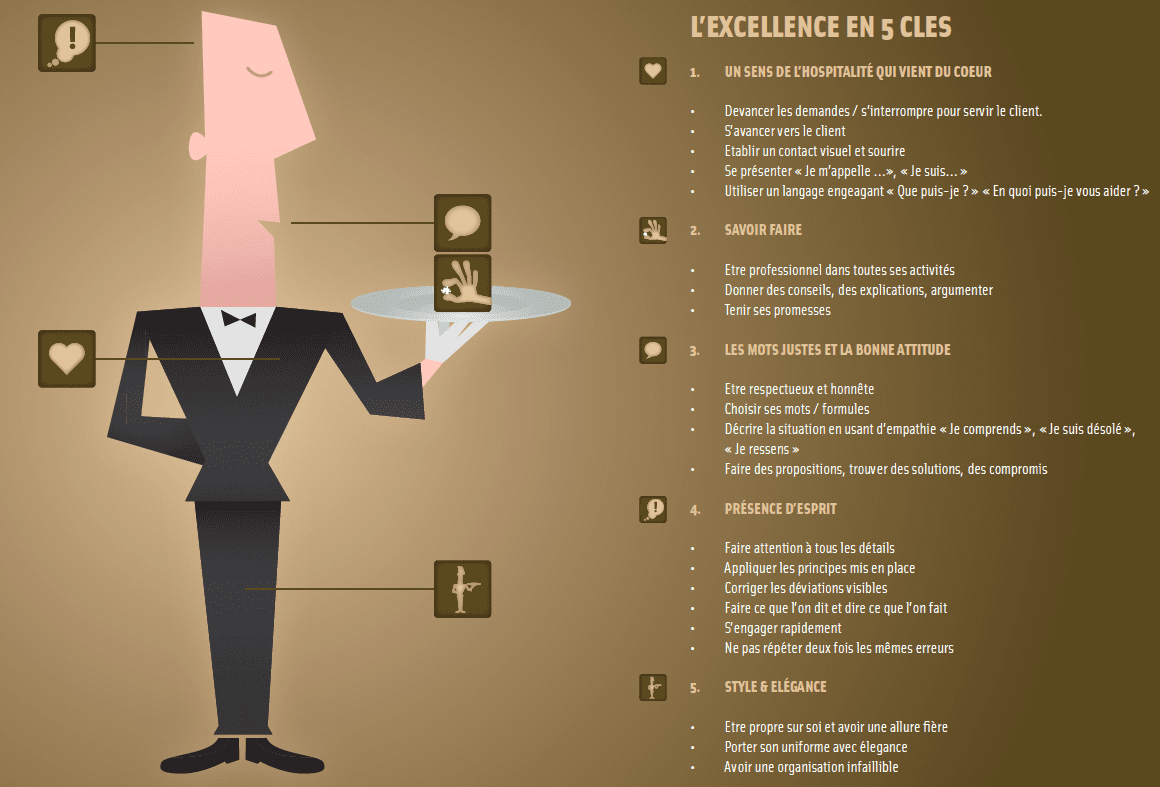
Our 5 Keys to Excellence summarize these principles, and our butler, Hubert, is our mentor, let us introduce him :
Hubert is our guide, and thanks to him, we experience Excellence anew every day by applying the principles we’ve developed as a team!